Material applications
SelvedgeHaven Procurement outdoor project briefs
FREE sourcing support and up to 3% coordination support for qualified business buyers. Eligibility applies to qualified business buyers and is confirmed after we review your product, quantity, destination, and sourcing requirements.
Material applications
Project buyers should convert a weather, abrasion or next-to-skin story into purchase fields before mills are asked for numbers.
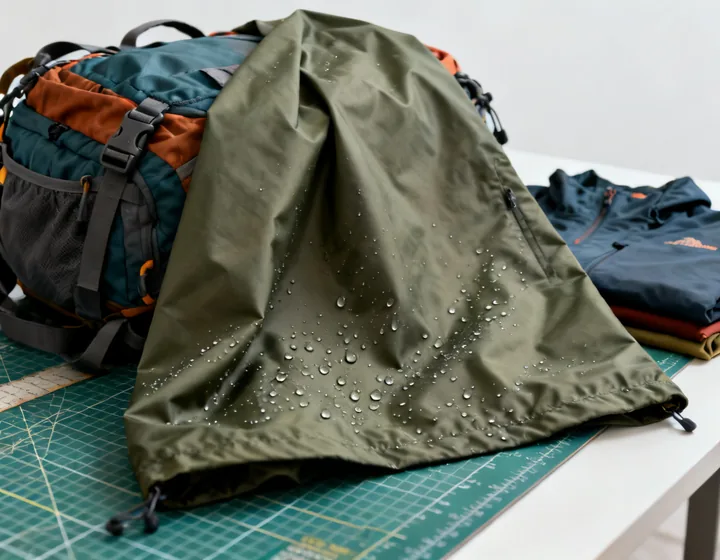
State whether the fabric faces rain, UV, flexing at zippers, or repeated wash. A shell that sheds water on a pack lid is not automatically suitable as a breathable laminate for a running jacket. Record contact surfaces, sewing plan and expected service environment so hydrostatic pressure and moisture vapor transmission are not copied from an unrelated program.
Name the method, edition, specimen size and wet or dry condition. Abrasion, tear strength, colorfastness and shrinkage results only help when they attach to the proposed article. A method title without a laboratory, date and material reference is not a result.
Usable width, roll length, DWR or lamination stage, and quantity per color change yield. Ask whether greige, dyed, coated or laminated material is included. Delivery stages and packing for a US destination belong on the same brief as the material fields.
This page supports outdoor and performance fabric projects. It does not introduce a new measured landing keyword. Keep unknown fields visible rather than filling them with assumptions from a reference brand search.
Apparel developers, importers and industrial converters often arrive with a finished-product sketch and a weather story. That is not yet a purchase specification. Record whether the fabric is a shell, lining, insulation package, pack body or awning skin. Note zipper tape abrasion, seam tape compatibility and whether DWR is applied before or after lamination. Quantity should be stated per color and in total, with yards, meters, rolls or kilograms named. US destination and requested sampling versus bulk windows sit beside those numbers. If documents such as a mill TDS or a prior test report exist, bind them to the exact article instead of uploading a generic certificate as site proof. SelvedgeHaven Procurement uses that packet to request comparable factory quotations; it does not convert a project sketch into an outdoor rating.
Stock fabric versus custom development is a real trade-off on outdoor programs. A stock program can shorten sampling when GSM, usable width, weave or knit gauge, and finish already fit. Custom development can align warp/weft density, laminate stack, DWR chemistry and insulation fill weight, but it needs explicit minimums, lab dips, strike-offs and written approvals. Lowest unit price versus comparable delivered scope is a second split: a mill quote that omits usable width, yield, packing, testing, duties and sampling charges is not the same offer as a quote that includes them. Generic family brochures help discovery; exact-product evidence (article-tied hydrostatic pressure, moisture vapor transmission, abrasion resistance, colorfastness, shrinkage and, where requested, supplier ISO 9001 or OEKO-TEX STANDARD 100 documents) supports review of the proposed construction. SelvedgeHaven Procurement does not hold mill capacity, certificates or customer names, so these remain checks on the supplier packet rather than site credentials.
Share end use, documents already held, delivery stages and site or sewing constraints with quantity and destination.
Send a fabric briefQualified business buyers may receive FREE matching and initial quote support, with up to 3% coordination support after review. Eligibility applies to qualified business buyers and is confirmed after we review your product, quantity, destination, and sourcing requirements.